Press Center

The Art of Exclusivity
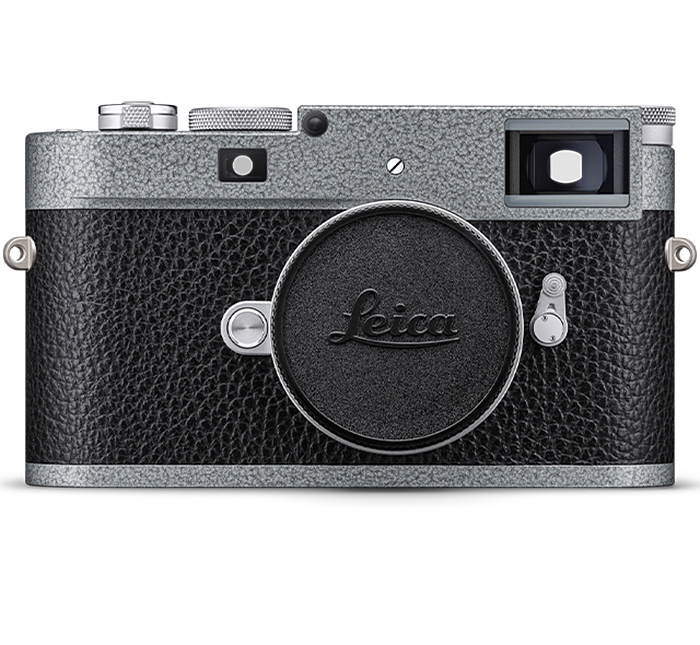
1930년대부터 해머톤 도장은 기술적 미학과 특별한 내구성을 상징해 왔습니다. 라이카 M-A 해머톤은 이 전통을 이어받아 희귀 라이카 모델을 연상시키는 특별 에디션으로 탄생했습니다. 독특한 표면은 과거 고급 기술 장치에 사용되었던 도장을 그대로 재현한 것입니다. 각 기기의 도장 구조는 모든 카메라를 유니크하게 만들어주며, 가장 근본적인 형태의 아날로그 M 사진을 구현합니다. M-A 해머톤은 순수하게 기계식으로만 작동하며 높은 신뢰성을 자랑합니다. 이미지 구도부터 빛의 조건을 판단하는 일, 조리개와 셔터 속도, 초점을 설정하는 과정까지 모든 촬영 요소를 직접 결정할 수 있습니다.

변치 않는 품질
독일에서 제작되는 M-A 해머톤의 상판과 하판은 견고한 황동으로 이루어져 있습니다. 정교한 크로스 널링, 유광 실버 포인트, 화이트 음각은 라이카 M의 절제된 조형미를 더욱 돋보이게 만듭니다. 높은 내구성을 자랑하는 정밀한 카메라의 클래식한 디자인은 에보나이트 스타일의 블랙 가죽 커버로 완성됩니다.

베츨라에서 이어온 장인정신
라이카 팩토리의 전문 직원들이 정교한 공정을 거쳐 각 M-A 해머톤 하나 하나에 고유한 표면 질감을 손으로 완성합니다. 이렇게 완전한 기계식 아날로그 M 카메라는 세상에 단 하나뿐인 특별한 제품으로 탄생합니다. 스타일을 중시하는 사진가와 탁월한 장인정신을 높이 사는 모든 이들을 위한, 그 자체로 특별한 카메라입니다.
상세정보
| Name | LEICA M-A |
|---|---|
| Camera type | Leica M-A (type 127) compact, |
| Lens mount | Leica M-Bayonet |
| Lens system | Leica M-Lenses,16–135 mm |
| Exposure control | Manual setting of shutter speed and aperture with values from an external exposure meter or by estimation |
| Flash exposure control | |
| Flash connection | Hot shoe – accessory shoe with centre contact |
| Synchronisation | On first shutter curtain |
| Flash exposure control | Computer control by the flash unit or guide number calculation and manual setting of the required aperture value |
| Viewfinder | |
| Viewfinder principle | Large, bright, combined bright-line viewfinder with automatic parallax compensation |
| Eyepiece | Adjusted to –0.5 dioptres; correction lenses available for –3 to +3 dioptres |
| Image field framing | By projection of pairs of bright-line frames for 28 and 90 mm, 35 and 135 mm, 50 and 75 mm lenses; automatic display of corresponding frames when lenses are locked into the bayonet mount |
| Frame selector | Lever enabling alternative frame pairs to be displayed in the viewfinder without changing lenses (e.g. for framing comparisons) |
| Parallax compensation | The horizontal and vertical differences between the viewfinder and lens axes are automatically compensated for in relation to the focusing distance |
| Concordance of viewfinder and film image | The bright-line frame size corresponds to an image size of approx. 23 × 35 mm at the minimum focusing distance for all focal lengths; focused at infinity, and depending on the focal length, approx. 9% (28 mm) to 23% (135 mm) more will be captured on the film than is shown in the corresponding brightline frame |
| Magnification | 0.72× (for all lenses) |
| Long-base rangefinder | Coincident and superimposed image rangefinder, shown as a bright field at the centre of the viewfinder image |
| Effective rangefinder base | 49.9 mm (mechanical rangefinder base 69.25 mm × viewfinder magnification 0.72×) |
| Shutter and shutter release | |
| Shutter | Horizontal rubberised-cloth focal plane shutter; extremely low noise; mechanically controlled |
| Shutter speeds | From 1 s to 1/1000 s in one-stop increments, B for exposure times of arbitrary length |
| Shutter release | Standard internal thread for remote-release cables |
| Film loading, advance and rewinding | |
| Loading | Manual loading after removal of the base and opening the rear flap |
| Film advance | Manually, with rapid wind lever or Leicavit M; motorised, with Leica Motor-M, Leica Winder-M, Leica Winder M4-P or Leica Winder M4-2 (from article number 10 350) |
| Rewinding | Manual, pull-out rewind knob after disconnecting the advance mechanism with the R-lever on the front of the camera |
| Frame counter | On camera top plate; automatically reset when camera baseplate removed |
| Camera body | |
| Material | One-piece full-metal body with rear flap; top deck and baseplate in brass with black or silver chrome finish |
| Tripod bush | Thread A 1/4, DIN 4503 (1/4″) |
| Rear flap/features | Reminder dial for film sensitivity |
| Dimensions | Approx. 138 × 38 × 77 (length × depth × height, in mm) |
| Weight | Approx. 578 g |
| Package includes | Body cap and carrying strap |